Private Office vs Dedicated Desk: Which One Fits Your Business?
At some point, most growing businesses in a coworking space hit the same question: stay at a desk in the open space, or take the jump into a private office? We watch members make this decision every year, in both directions. Here is how to think it through.
What a dedicated desk gives you
A resident desk (from $110 per week at Mâché, ex GST) is your own permanent spot. Nobody else sits there, your second monitor stays set up, and you have 24 hour keyless access. You are in the open space, which means you are in the flow of the community: the conversations, the introductions, the energy of other people working.
For solo operators, this is usually the sweet spot. You get the ownership and routine of your own space without paying for walls you do not need.
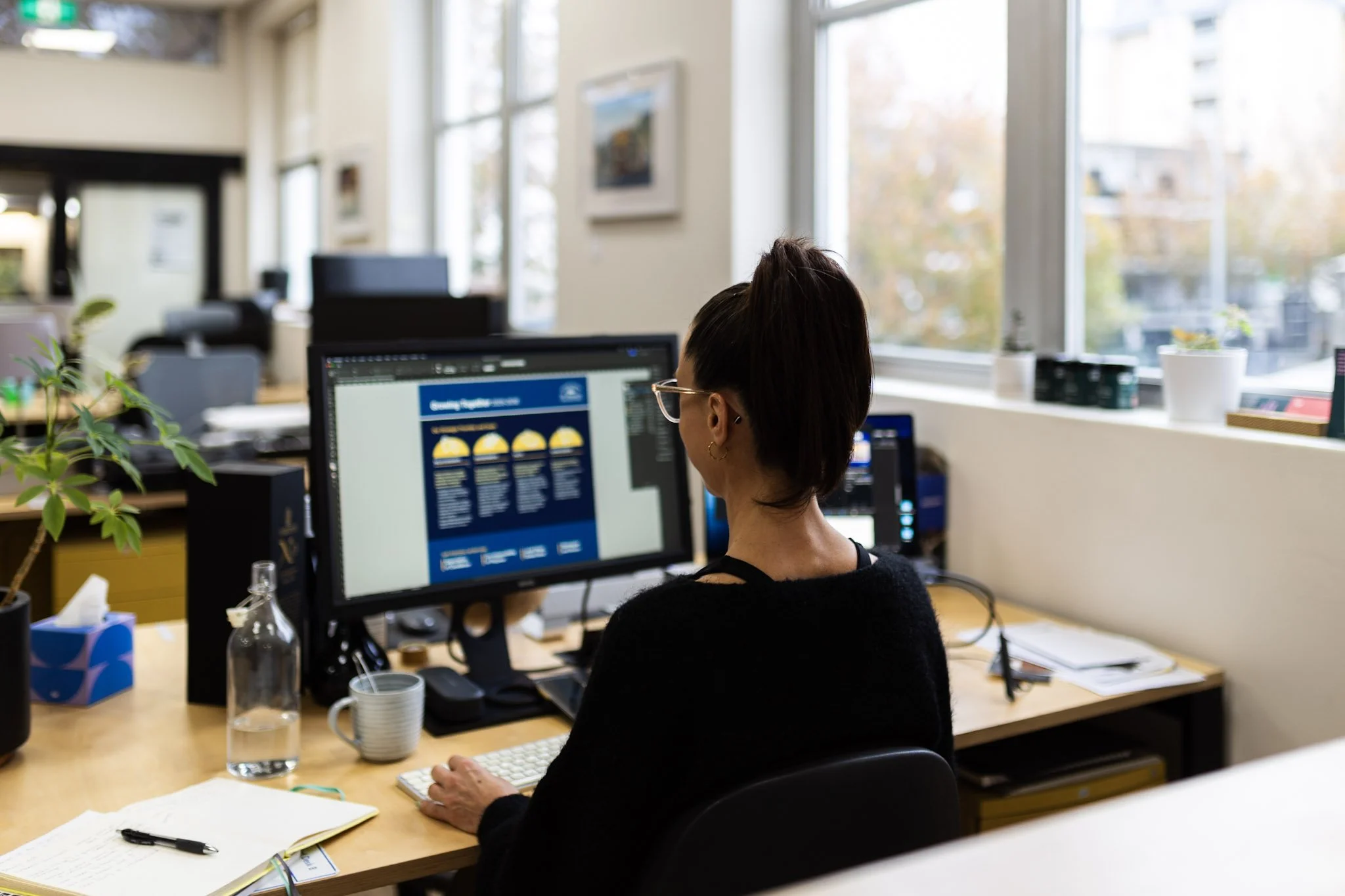
Mache Coworking’s open Resident Desk on our first floor. Featuring beautiful south-facing large windows and premium birch timber desks.
What a private office adds
A private studio (from $338 per week, ex GST, for two-person spaces) gives you a lockable room. That changes four things:
Confidentiality. If your work involves client calls you cannot take in the open, sensitive documents, or conversations about money, a door is not a luxury. Accountants, lawyers, recruiters and financial advisers usually need one from day one.
Calls without headphones. If more than a third of your day is video calls, an office pays for itself in not having to book a phone booth for every meeting.
A team identity. Two or more people working together need to talk all day. Doing that in an open space is hard on you and harder on your neighbours. An office gives a small team its own culture inside the bigger community.
Storage and presence. Stock, equipment, files, a whiteboard covered in things you do not want photographed. A lockable room solves all of it.

Mache Coworking’s Suite 9 featuring timber ceiling, floors, LED’s and stand alone kitchen.
The honest trade-off
The thing people do not expect: moving into an office can make you more isolated, not less. The door that keeps distractions out also keeps serendipity out. Members who move into offices and thrive are the ones who still eat lunch in the kitchen and come to community events. The ones who close the door in January and emerge in December wonder why the community stopped happening to them. The walls are the product, but they come with a small tax on connection. Budget for it behaviourally.
The maths, roughly
A useful rule of thumb: a private office starts making financial sense at two people, and clear sense at three. One person in a private office pays a meaningful premium for the door, which is worth it if confidentiality demands it and rarely otherwise. Two people splitting a $338 - $400 per week studio are each paying a bit more than two resident desks, but they are now getting a room. At three or four people, the office is usually the cheaper option per head. The bonus here to think about too is that Office Suite members getting a higher credit balance of meeting rooms.
Against a traditional commercial lease, a small team office in a coworking space wins on almost every line for teams under eight or so: no fit-out cost, no separate internet, no huge bank guarantees, power, cleaning or insurance line items, and a notice period measured in weeks rather than years.
When to make the jump
The signals we see most often before members upgrade: you are booking phone booths daily, you have hired your first person, a client asked whether your calls were private, or you catch yourself lowering your voice a lot.
If two or more of those sound familiar, come look at what is available. And if none do, keep your desk. The whole point of this model is that you can move between the two when the business changes, not before.
See our studios and suites or book a tour to talk it through.
Prices exclude GST and are current as of July 2026.