
Recently I spent two days on Kangaroo Island shovelling limestone gravel.
Some good friends are building ecolodges over there. They needed fire-break paths around the buildings. The island burned in the summer of 2019–20. The paths are not just landscaping.
So we shovelled. Twelve hours over two days. Shovel in, shovel out. Rinse and repeat.
When it was done we sat on a beach with a drink and looked at the water. I have definitely had better drinks. But I don't think I've enjoyed one as much.
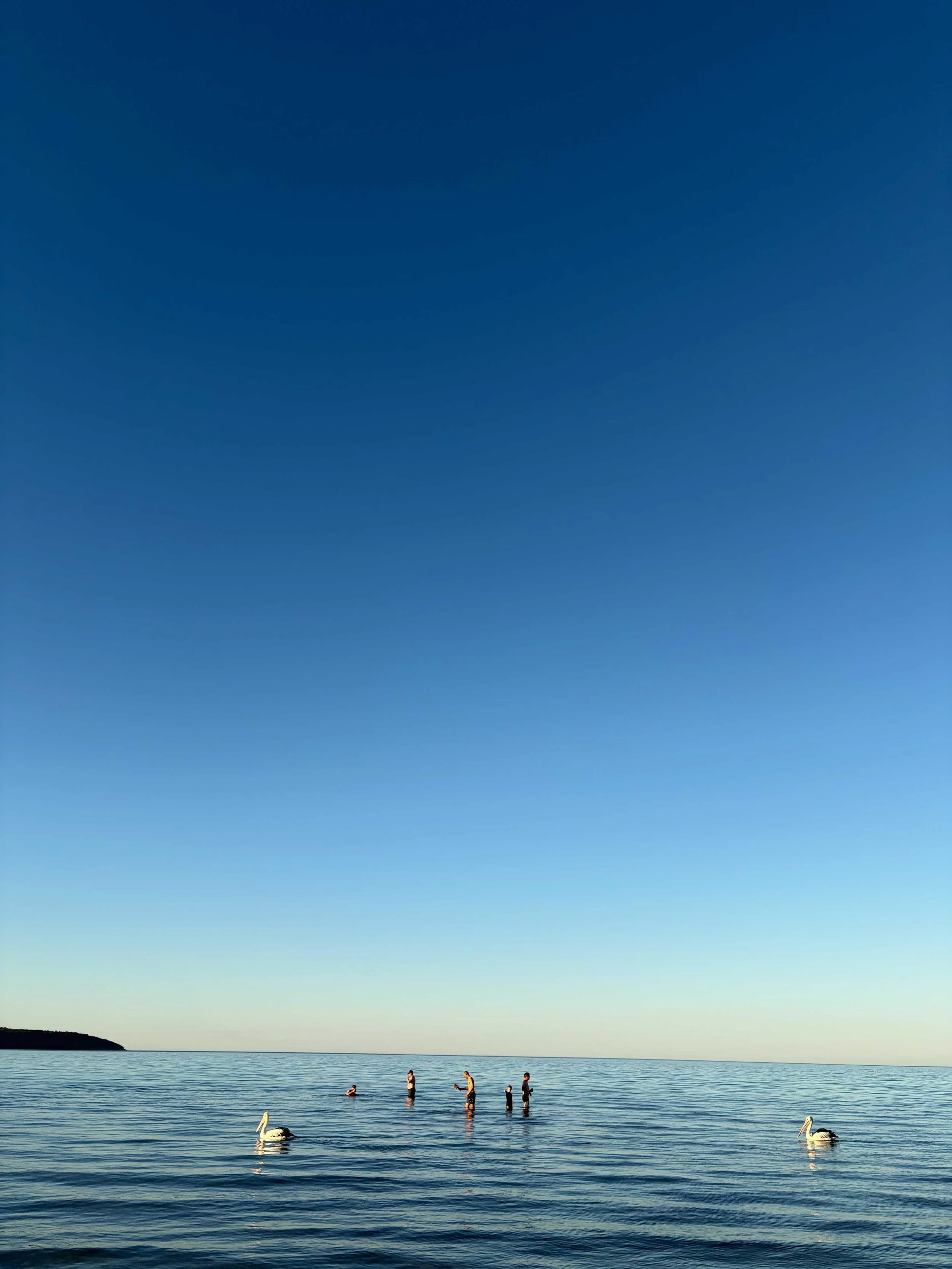
Looking out at Island Beach Kangaroo Island
It's taken me two weeks of pondering to work out what that feeling was. It's also why I'm writing this.
There's a question that has been bugging me for a while. When did we all become consumers?
For most of human history, most people produced things because, let's be honest, the alternative was not surviving. Food, shelter, tools, clothes. You made it, or someone close to you made it, or you went without.
It's tempting to say those people were happier... I don't think they were. A farmer in a bad season was not happier than I am, and I don't think anybody chooses hunger for the sense of achievement... maybe some monks do actually.
Anyway, something from that life seems to be missing, and I think I found it on the beach.
It was never producing versus consuming. People back in the day consumed too. They ate what they grew, wore what they made, sat by fires they built. I think the difference was the order. Consumption came after production. It was the reward, not the default.
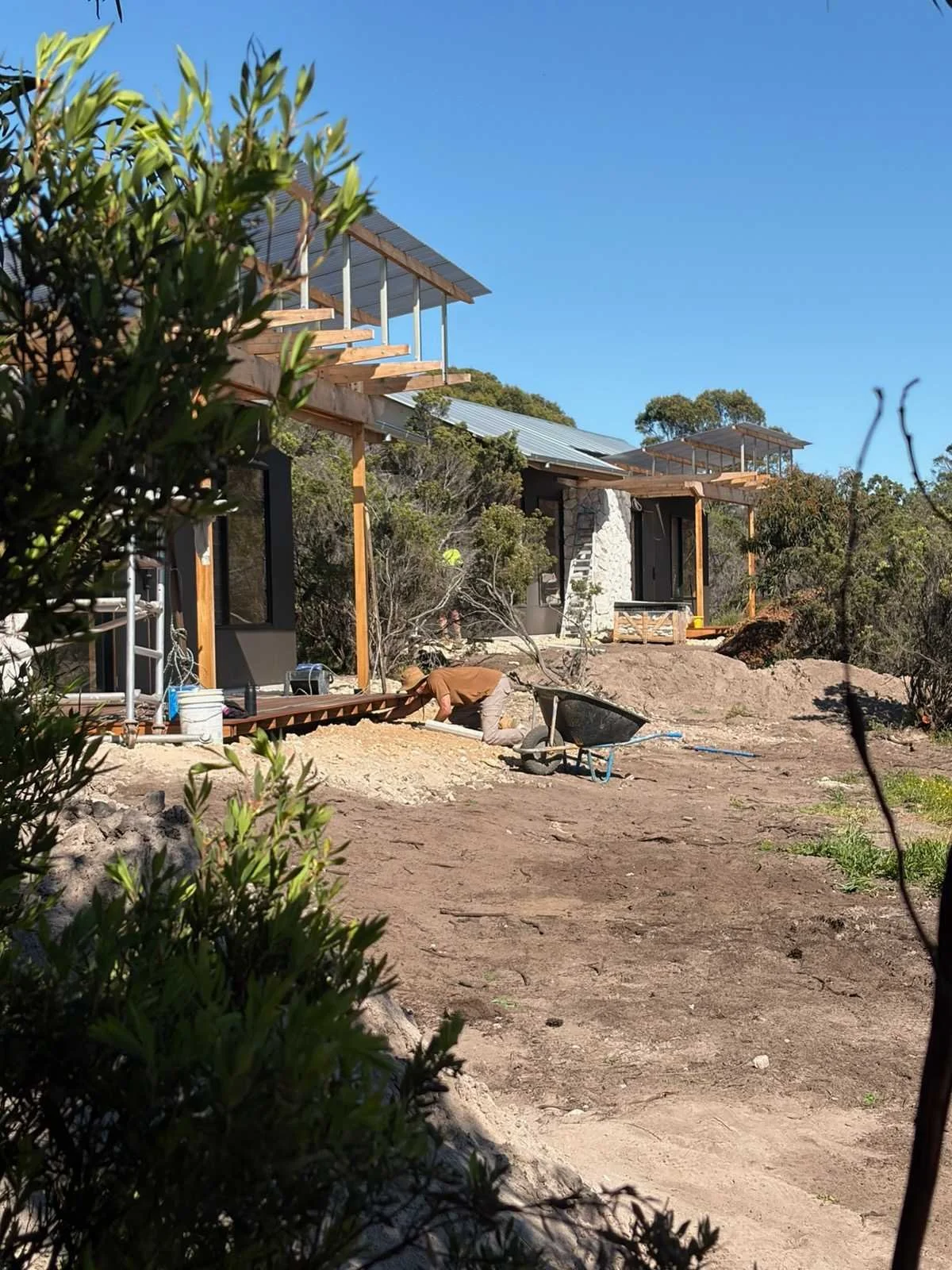
Me pushing gravel uphill and under the decking.
The drink on the beach was earned. That's the whole reason it was wonderful. Not because the drink was good or the view was rare. Because twelve hours of shovelling gravel by hand sat behind it.
I know the other version well. A streaming service on a Sunday night. A video game that runs past midnight. I do both. After a week I can't account for, they feel like filler. After a hard-earned thirst, these same things feel like a treat.
My daughter is six. So is Bluey, which is the only reason I know what comes next. There's an episode called Ragdoll. Bandit, Bluey's dad, tells the girls he'll drive them to the shops for an ice cream if they can get him into the car. Then he goes limp.
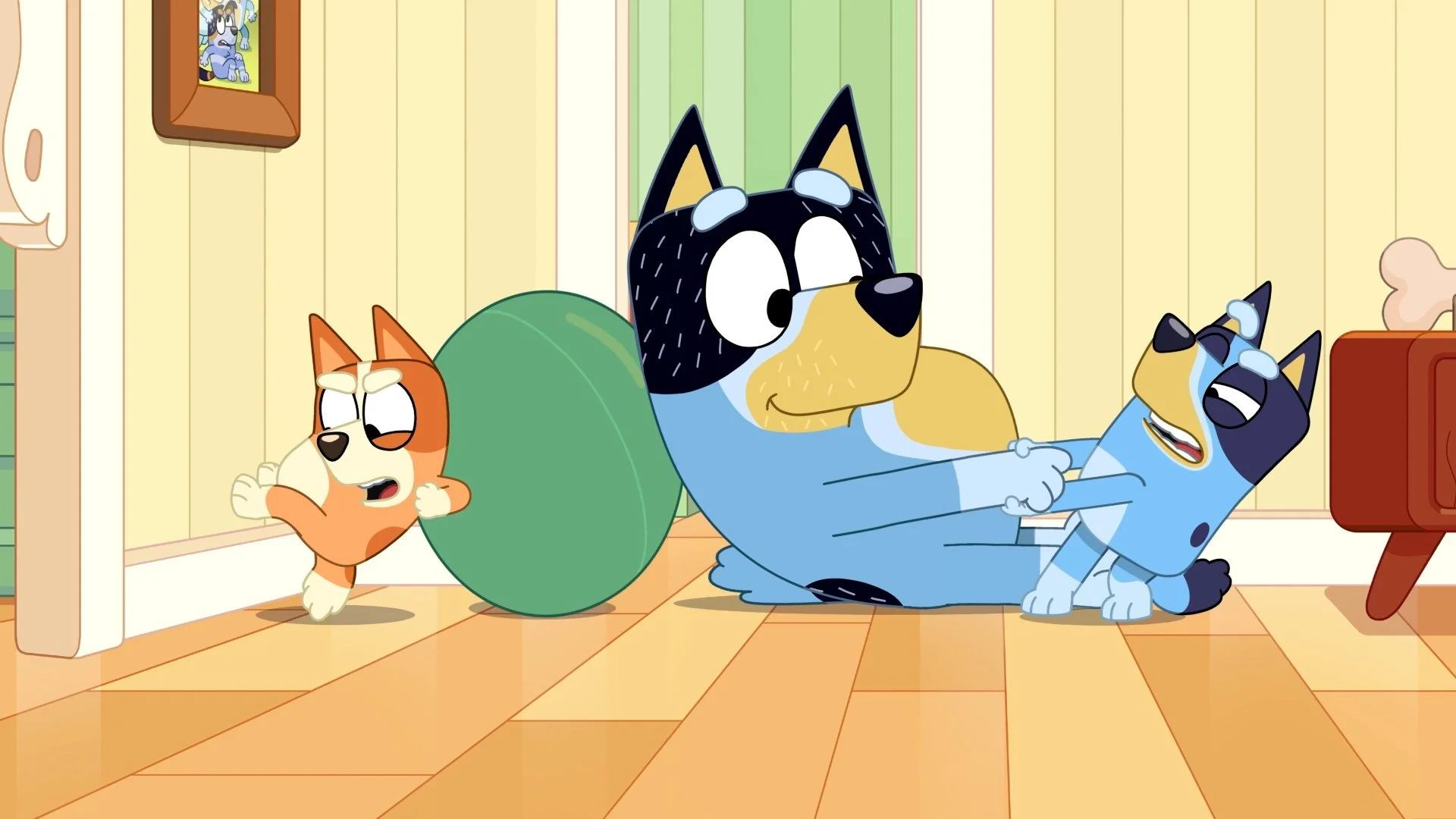
Bandit going ragdoll
They spend the whole episode dragging him towards the car while he recites every proverb about hard work ever written. When Bluey finally gets her lime ice cream, the show slows into a psychedelic sequence and lets the sense of achievement wash over her.
The moment of achievement
Hang on a minute, I know that feeling... it's the same one I had on the beach.
Bandit's point is sharper than mine. If you can't be assed reading any further, go and watch the episode instead. It's seven minutes and it's brilliant. The shops were a short drive away. The ice cream was never really hard to get. Modern life has made most things almost too easy. But he put the difficulty back in on purpose.
Bandit is doing this for his kids because the world now hands them the ice cream. It made me wonder what happens when it gets handed to us adults. When the tools we use for work get good enough that most things are simply done, what then?
I s'pose we'll have to go looking for the difficulty on purpose, the way Bandit did... and my concern is that most of us won't know how.
So maybe the question isn't when we became consumers. Humanity always has been. The question is when we stopped earning it.
Earning it, as far as I can tell, has three parts. You make something. It works... it serves a need that is real. And if it's useful, someone else uses it.
My two days of ditch digging had all three. Made by hand, for a real need, for people I care about, who will walk those paths every day and probably think about them never. That last part matters more than it sounds. They weren't dug for strangers.
Mâché is the same story, but over a 10 year period. I wrote last time about the Burgundy Room, the studio I built during COVID in a space nobody had ever used. Now it's one of the most used rooms in the building, mostly by people I'd call friends before I'd call them members. Made by hand, for a real need, used by people I'm close to. I didn't have to build it myself. Which is why I did.
Going for a drink with mates is easy. Digging gravel for twelve hours for a good cause wasn't. I’m not saying you have to do this all the time, but next time I catch myself skipping the hard part too much, I'll think of a six-year-old dragging her dad to the car for a lime ice cream.