
Coworking vs Working From Home: An Honest Comparison
We have run a coworking space in Adelaide for nearly a decade, so you might expect this article to conclude that coworking wins. It does not, at least not for everyone. Working from home is genuinely great for some people, and pretending otherwise would insult your intelligence. Truth is, I sometimes work from home when family commitments come a knocking. But here is the honest comparison, based on ten years of watching people try both.
Where working from home wins
Cost. Nothing beats free. If your home setup works, the financial argument for coworking has to come from productivity gains, not savings.
Deep focus, for some people. If you live alone or have a proper home office with a door, home can be the quietest place available to you. Some of our members still do their deepest work at home and use the space for everything else.
The commute is a hallway. No travel time is a real benefit, especially for parents doing school runs or anyone stitching work around care responsibilities.
Where working from home quietly fails
The distractions are sneakier. It is rarely the TV. It is the washing, the fridge, the delivery, the sense that you could just quickly do one household thing. Each one costs minutes; the context switching costs more.
The isolation compounds. Week one of working alone feels like freedom. Month six feels different. The research on remote work keeps finding the same thing: the loneliness creeps up slowly enough that people do not attribute their flat mood to it.
Work stops having edges. When your office is your kitchen table, work bleeds into evenings and weekends. Plenty of our members joined not to work more, but to make work stop somewhere.
You disappear professionally. Referrals, collaborations and opportunities mostly come from being around people. At home, your network slowly shrinks to your existing clients.
What coworking actually fixes
The desk is the least of it. What a good coworking space really sells is structure and other humans.
Getting dressed and going somewhere puts a boundary around the workday. Being surrounded by other people working is a focus aid that no productivity app replicates. And the incidental conversations, at the coffee machine, at community lunches, on the monthly dog walk, are where an unreasonable amount of business actually happens. We have watched members find their accountant, their developer and their next client within these walls.
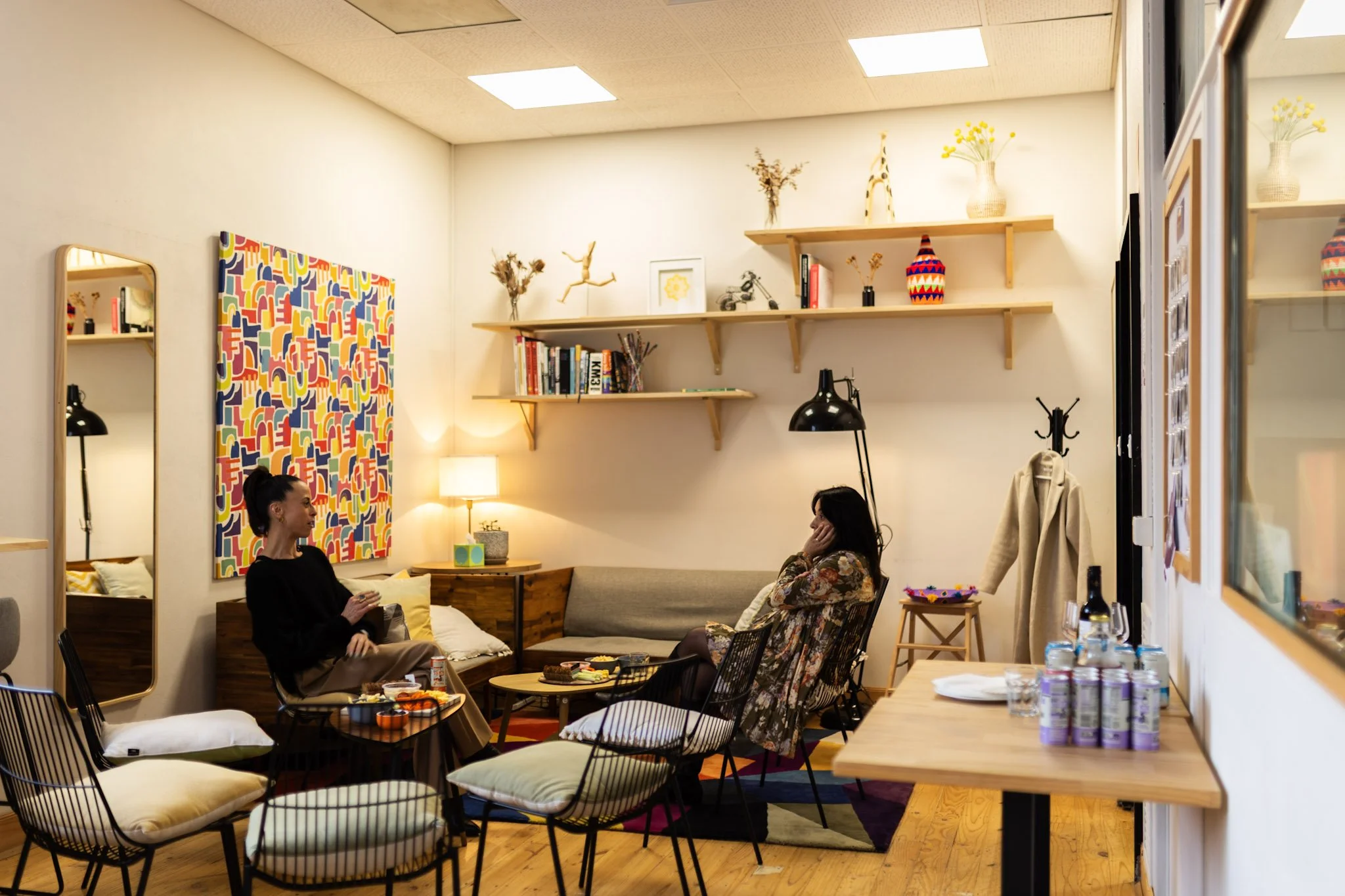
Mache Coworking’s upstairs living room with Sarah and Natalia
The hybrid answer most people land on
The genuinely useful insight from ten years of this: it is not a binary choice. Most of our members work from home some days and from the space on others. Home for deep focus, the space for structure, meetings and human contact. That is why entry-level memberships exist. A roaming desk from $45 per week (ex GST) gives you one to three days of structure without abandoning the home office you have already set up.
A fair test
If you are on the fence, do not decide from an article, including this one. Take a day pass, work a normal day, and pay attention to two things: how much you got done, and how you felt at 5pm. Those two numbers will tell you more than any comparison piece.
Grab a day pass or book a tour and run the experiment.
Thanks for reading. I’m Dans the founder of Mâché (mash-aye), a coworking community I’ve built since 2016. Say hi on LinkedIn.